Peak-season queues force operators to make a practical decision: buy one large train that carries everyone at once, or run several smaller trains that depart more often. Both strategies work, but they demand different routes, staffing, maintenance plans, and budgets. This guide compares the two approaches for trackless train rides for parks and explains how to choose based on your visitor flow.
Start with Real Capacity Numbers
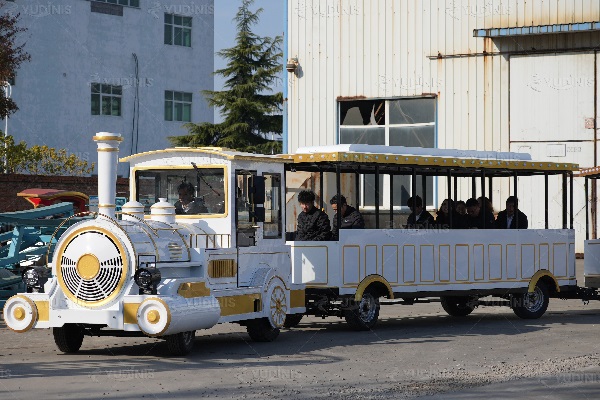
Capacity is the first variable. Trackless trains are commonly supplied from 16 to 70 seats, and each departure moves a fixed number of guests. One 70-seat train departing every 12 minutes carries fewer passengers per hour than two 40-seat trains departing every 8 minutes, even though the seat count looks similar. Always convert seat numbers into hourly throughput using realistic dispatch and loading times before deciding. Understanding large trackless train capacity in hourly terms is what makes the comparison meaningful.
The Case for One Large Train
A single large train is efficient in staff, energy, and maintenance because one driver and one set of running gear serve more passengers. It also creates a stronger visual presence on the route and can be branded as the park’s signature ride. For parks with long, wide routes and predictable crowd patterns, one large train often delivers the lowest operating cost per passenger.
The Case for Several Smaller Trains
Smaller trains reduce waiting time because they depart more frequently, which matters in family parks where guests dislike standing still. Multiple units also spread risk: if one train needs maintenance, service continues. Shorter trains turn more easily on tight routes and can serve several zones at once instead of running a single long loop. For parks with multiple attractions and limited route width, a small fleet is often more practical. Diesel and battery options are available depending on terrain, and a diesel trackless train is a sound choice where long running time and steep routes matter.
Staffing, Route, and Charging Logistics
One large train needs one driver and one boarding team, while a small fleet multiplies operators, boarding staff, and charging or refueling slots. Route design matters just as much: a long loop suits a big train, while short interconnected loops favour several smaller units. Confirm where trains can park, recharge, and be serviced between departures, because logistics often decide the answer as much as capacity does.
Cost, Maintenance, and Downtime
Purchase cost per seat is usually lower on one large train, but operating flexibility and redundancy favour a fleet of smaller units. Maintenance programs are similar in type – brakes, tires, batteries or engines, lighting, and safety systems – yet a fleet multiplies the number of inspections. Weigh the risk of downtime during your busiest weeks: losing the only large train means losing the whole attraction for the day.
A Practical Peak-Season Strategy
Many parks choose a hybrid solution: one larger train for the main scenic loop and two or three smaller trains for shuttle service and secondary zones during peak days. This combination maximises throughput without over-investing in a single unit, and it lets you scale service up or down with the season. Base the final decision on measured visitor flow, route geometry, and the staffing you can realistically sustain.
Whether you buy one large train or several smaller ones, the goal is the same: keep guests moving comfortably through your park. Work with an experienced Dinis trackless train supplier that can model throughput for your specific route, and learn how the modern trackless train system evolved into today’s flexible park transport. To compare capacities and operating plans, visit https://www.dinistrains.com/trackless-train-rides/ and request a fleet recommendation.