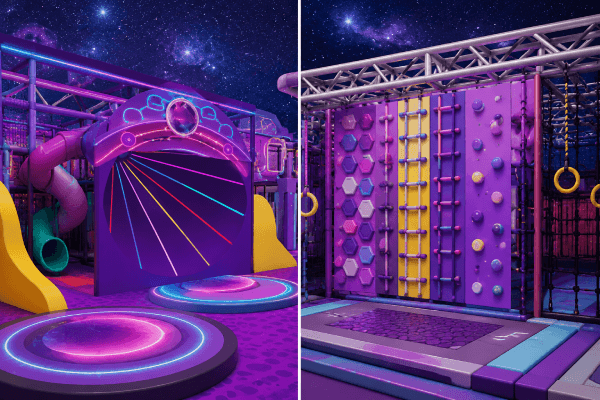
Testing the Market Before You Sign a Lease
Opening a ninja course is an equipment purchase wrapped inside a property decision, and the order of those steps matters. Before signing a lease, measure the clear height, the column spacing, and the load capacity of the floor, because those three numbers decide which obstacles are even possible. Anyone hoping to start a ninja course business also has to check demand first: count the schools, youth sports clubs, and competing family venues within a comfortable drive, and confirm that enough households sit close enough to visit on a weeknight. If the catchment is thin, no amount of clever equipment will fill the lanes or pay the rent.
How Much Clear Space a Ninja Course Really Needs
Space planning is where new operators most often overspend. A ninja course business planning package works backwards from the number of simultaneous runners the venue intends to serve, then derives lane width, obstacle spacing, queue capacity, and spectator seating from that figure. Renting a building that is far taller than the equipment needs wastes money on heating, and renting one that is slightly too short rules out half the catalogue. Confirm ceiling height, egress aisle width, and mat depth before committing, and check that the landlord permits the structural fixings the course will require.
Pairing the Course With a Second Attraction
Most ninja venues earn more when the course is not the only reason to visit. Adding a trampoline park for sale alongside the lanes turns a single-ticket attraction into a multi-hour outing and lifts the average spend per head. Shared facilities, one front desk, one cafe, and one party room, keep operating costs well below what two standalone businesses would carry. The combination also widens the marketing message, because the venue can advertise active family entertainment rather than one specific sport, which appeals to a far larger local audience.
Choosing Equipment Without Overpaying
Sourcing should balance capital cost against lifetime cost rather than sticker price alone. A commercial supplier such as a Miland indoor playground manufacturer will normally provide engineering drawings, installation support, spare parts, and a maintenance schedule as part of the package. Ask for the fall-height rating of every element, the load rating of each fixing, and the lead time for replacement parts before signing anything. Equipment that fails in year two, or that cannot be repaired locally, quietly becomes the most expensive option on the shortlist.
Putting the Numbers in a Business Plan
A written plan still matters, even for a venue this physical. Following the structure of a conventional business plan, market analysis, operations, staffing, and financial projections, forces the founder to test assumptions about attendance, ticket price, and seasonality before the money is committed. Model a realistic weekday instead of a busy Saturday, and stress-test the numbers against school holidays and the quiet weeks that follow them. Lenders and landlords read these documents closely, and a clear plan usually shortens lease negotiations.
Staffing, Marketing, and the First Year
Staffing and marketing decide how quickly the venue stabilises. Coaches who can score runs consistently, brief nervous beginners, and explain safety rules politely are the difference between a course that feels professional and one that feels chaotic. On the marketing side, school partnerships, sports clubs, and local competitions bring in groups that individual advertising rarely reaches. Track attendance by hour and by day from the first week, tie the promotion calendar to the school year, and reinvest early revenue into the elements guests actually use. Categories: Indoor Playground, Ninja Course, Obstacle Course, Family Entertainment Center, Commercial Playground Equipment, FEC Attractions. Tags: ninja course, indoor playground, obstacle course, family entertainment center, commercial playground, fec attractions. https://www.milandplay.com/product/ninja-course/