A farm amusement train can carry visitors in open carriages during the day and still need to move equipment or produce at other times. Adding a separate passenger carriage is often cheaper than buying a second train, but the coupling and the route must support it. This guide explains when a farm amusement train passenger carriage is the right addition.
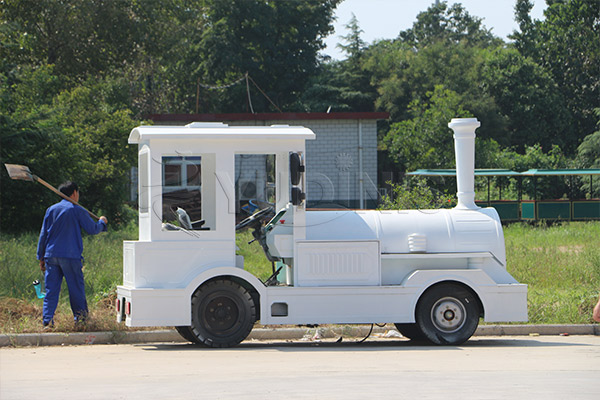
Identify the Capacity Gap
Compare the number of visitors the train carries per hour with the number arriving at the farm. Record the queue length at three points in the day to see whether the peak is consistent or only occurs during events. If the queue is long because the carriage is too small, a second passenger carriage adds seats without changing the locomotive. If the delay comes from the loading procedure or the route, a carriage will not solve it.
Check the Towing Capacity
The locomotive must move the additional carriage on the steepest part of the route, with a full load. Ask the manufacturer for the rated towing capacity, the gradient limit and the effect on braking. Ask for the figure in writing, including the test conditions. A passenger carriage for a farm train should be matched to the locomotive, not chosen by seat count alone.
Plan the Coupling and the Train Length
The coupling system must suit the existing train, and the longer train must fit the station and the turning areas. Confirm the coupling type, the inspection points and the platform length before ordering. A carriage that cannot be coupled safely or boarded at the existing stop is not an upgrade.
Specify Comfort for Visitors
Passenger carriages need seats, weather protection and a safe boarding height. If the carriage is also used for farm work, make the seats removable and protect the cargo area. Reviewing the trackless train carriage range shows how different carriage types balance capacity and comfort, and the general principles are described in material on passenger carriage design.
Check the Route and the Ground
A longer train needs wider turns and better ground clearance. Walk the route with the extra length in mind, and check the surface on the farm tracks. Test the train with the additional carriage on the actual farm track before accepting delivery. If the route includes soft ground or tight gates, the additional carriage may create a new restriction that the original train did not have.
Plan Maintenance and Registration
Finally, confirm the inspection requirements for the additional carriage and add it to the maintenance schedule. Check the spare parts, the tyre and brake wear and the cleaning routine. A carriage that is not maintained will reduce the reliability of the whole train.
A separate passenger carriage is worthwhile when the capacity gap is caused by seats, the locomotive can tow it, the station can serve it and the route still works. Confirm the coupling, comfort, route and maintenance before ordering. Operators can review the range from Dinis farm train carriage team and start from the product page at https://www.dinistrains.com/farm-amusement-trains-for-sale/.