A wild mouse roller coaster is the most efficient way to add real thrill capacity to a compact site. The layout is tight, the footprint is small, and the ride delivers the lateral snaps and tight turns that guests remember. The question every operator asks first is straightforward: what does a wild mouse roller coaster for sale actually cost, and what does that price include.
This guide explains the price structure, the site requirements and the specification points that separate a coaster that runs for fifteen years from one that becomes a maintenance problem in season two.
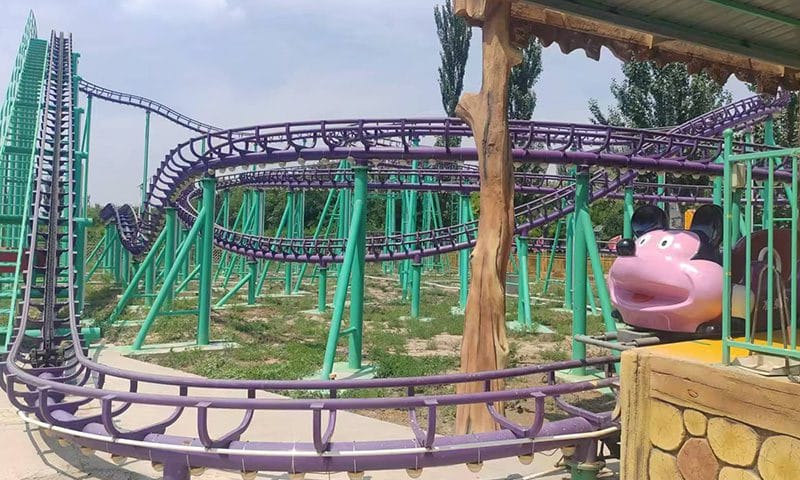
Wild Mouse Roller Coaster Price Ranges
A standard family wild mouse coaster with a single train and a track length of roughly 200 to 300 metres typically ranges from USD 180,000 to 450,000 ex-works, depending on track length, train capacity, theming and the level of automation. Larger custom layouts with two trains and a longer circuit move above USD 500,000. Freight, foundations, electrical supply, installation supervision and local testing are quoted separately and can add 15 to 35 percent depending on the destination.
What Determines the Wild Mouse Coaster Price
Track Length and Layout
Track length is the strongest cost driver because it sets the quantity of steel, the number of supports and the amount of foundation work. A mouse coaster packs roughly 100 metres of track into a footprint that would carry far less track on a conventional out-and-back layout, which is exactly why it suits urban parks and family entertainment centres.
Track Finish and Steel Specification
The running surface is the part guests and maintenance teams live with. Track and support steel is normally protected by hot-dip galvanization followed by a primer and topcoat, and the quality of that process decides how the structure survives coastal humidity, monsoon seasons and desert dust.
Trains, Capacity and Automation
Each additional train adds cost, but it also raises hourly capacity and shortens the queue. Lift, brake and block-zone automation, plus the safety control system, are usually 8 to 15 percent of the hardware cost and should never be value-engineered.
Site Works and Installation
Concrete foundations, anchor plates, cable routing and the station building usually represent 10 to 20 percent of the delivered project. A compact family roller coaster needs a level, well-drained pad and a properly sized electrical supply; on soft or unstable ground, piling costs can change the budget materially.
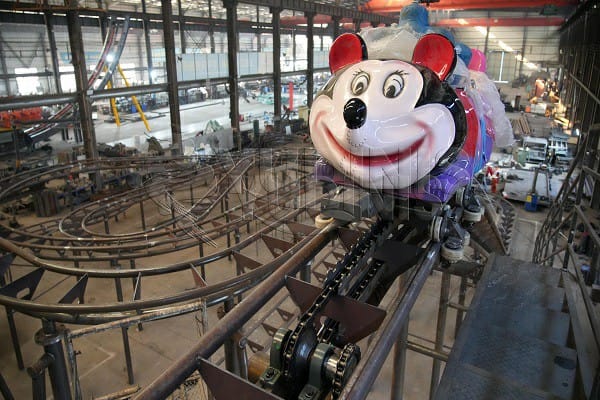
What a Quotation Should Include
- Track, supports, foundations drawings and anchor bolt specification
- Train or trains, restraints, wheels and complete spare parts list
- Control system, brake assemblies and safety circuits
- Operation and maintenance manuals, test certificates and load calculations
- Installation supervision, commissioning and staff training
- Packing list, loading plan and container quantities for freight comparison
Buyers comparing quotations often compare only the headline price. The quoted scope matters more: two offers that differ by 20 percent are usually quoting different trains, different control systems or different levels of installation support. To see the full specification behind the numbers, click here to see the ride and compare it line by line with the offers you already hold.
Space, Capacity and Throughput
A typical wild mouse installation fits inside a footprint of about 20 by 40 metres including the station and queue line, with clear height requirements set by the lift and the tallest track section. Hourly capacity depends on train size and dispatch interval: a single twelve-seat train dispatching every 45 seconds delivers roughly 900 guests per hour, which is enough to keep a family park busy without building a second major attraction.
Safety and Operating Requirements
Daily pre-opening checks cover restraints, brakes, wheels, chain or lift system and the control panel. Track inspection, bolt torque verification and non-destructive testing of critical welds belong in the annual plan. Operators also need a documented evacuation procedure for the highest point of the circuit, trained ride operators and a recorded maintenance log that satisfies the local inspector. Buying from a wild mouse roller coaster from Dinis means those documents arrive with the machine rather than being reconstructed afterwards.
Frequently Asked Questions
How much space does a wild mouse roller coaster need?
Plan on roughly 800 to 1,200 square metres for the ride, station, queue and fenced safety envelope, with additional space for a maintenance access route.
How long is production and delivery?
Standard layouts are produced in 60 to 90 days. Custom theming, imported control components or a two-train configuration can extend that to four to six months plus sea freight.
Is a wild mouse coaster suitable for a small park?
Yes. It is one of the few genuine thrill rides that fits a small urban park or FEC footprint while still offering enough capacity to justify the investment.
Choosing a Supplier
Ask for the track length, the number of trains, the certified capacity, the standard the structure is designed to, and the spare parts list. Then ask who will supervise installation and who signs off commissioning. As an experienced roller coaster manufacturer, we publish that information before the contract so owners can compare offers on the same basis. The wild mouse coaster price is only meaningful once the scope behind it is clear.