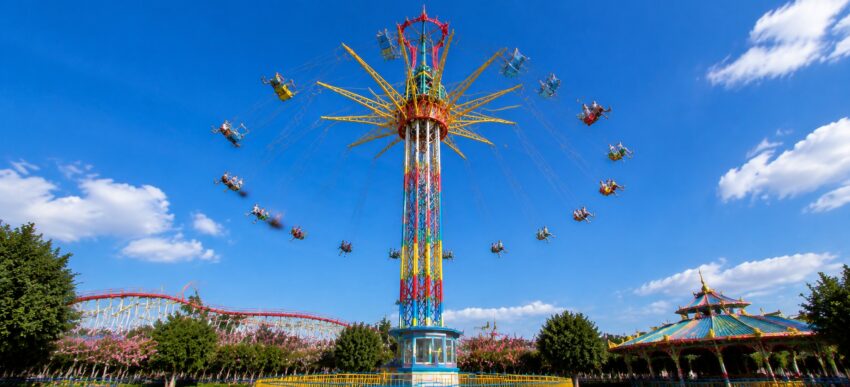
“How long will it last?” is usually asked about the structure, but the answer depends on which part of the ride you mean. A steel tower, a gearbox, a restraint lock and a control cabinet all age on different clocks, and the ride stays in service as long as the slowest-wearing component can be maintained or replaced economically.
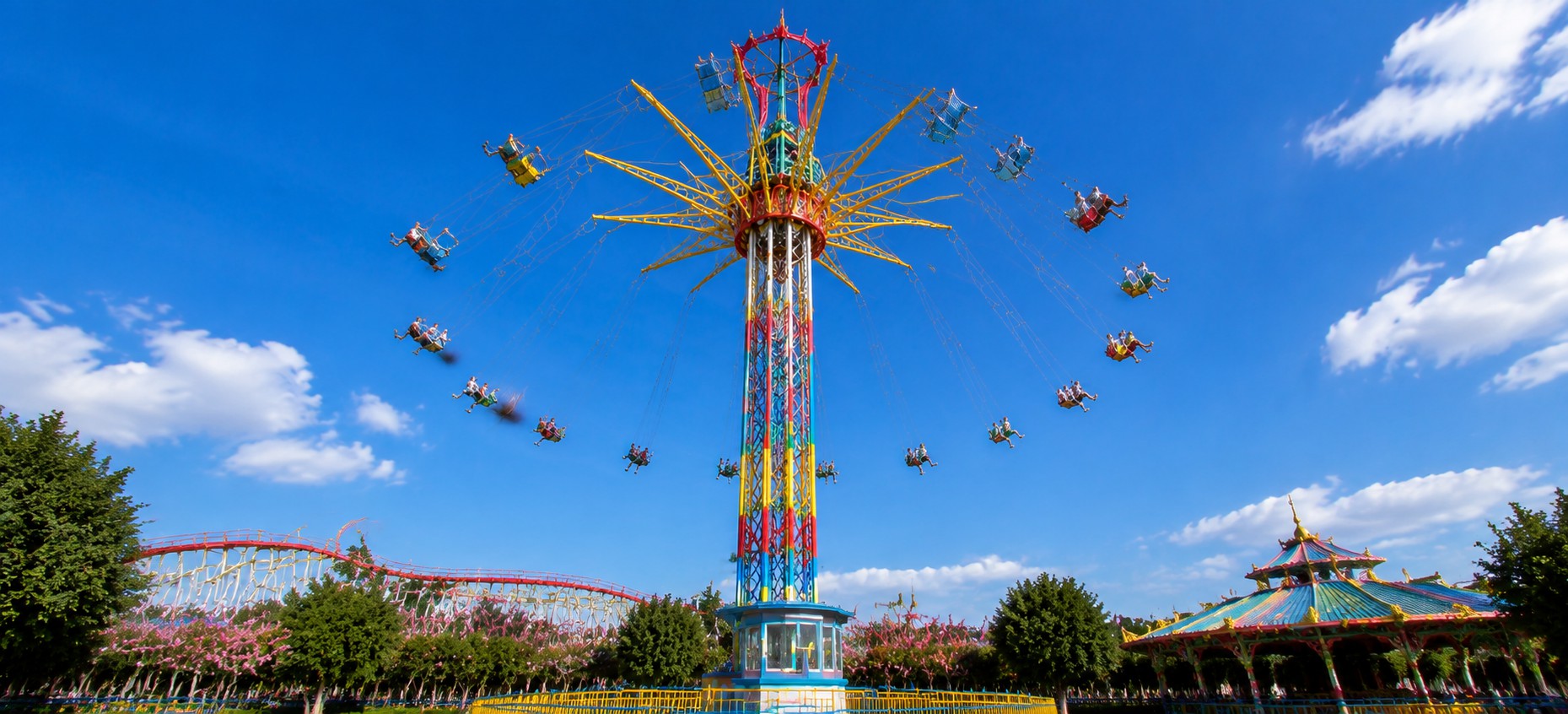
This article explains how long a 42m sky flyer ride for sale can realistically operate in a commercial park, what determines that number, and how to plan the refurbishment decisions that arrive long before the structure reaches the end of its life.
1. The Question Behind the Question
When a park asks how long a ride lasts, it usually wants to know how to spread the capital cost over its accounts, and when it will need to budget for replacement. Both are planning questions rather than engineering ones, and both need a realistic answer rather than a warranty figure.
The practical approach is to separate the structure, the mechanical systems and the electronic systems, and to plan each on its own replacement cycle.
2. Design Service Life vs Operating Life
Manufacturers design a structure for a service life measured in decades, assuming the loads and inspection regime it was specified for. That is not the same as the operating life of the ride, which depends on how many cycles it runs each year, how well it is maintained and how corrosive the environment is.
Two observation tower swing installations of the same model can have very different lives: one at a mild inland site running 150 days a year, the other on a coastal site running 300 days a year with salt in the air.
3. What Determines the Structure’s Life
The steel structure is the longest-lived part of the ride, provided the coating is maintained. The main risks are corrosion, fatigue at welded connections and damage from accidental impact.
Fatigue is managed by design: the weld details and stress levels are chosen so that the expected number of cycles does not cause cracking. It is then verified by inspection, which is why the annual structural review matters more than the calendar age of the ride.
4. Mechanical Components: The Shorter Clock
Drives, gearboxes, brakes, bearings and restraint mechanisms wear out faster than the structure. Their life is measured in operating hours and cycles, not years, and the manufacturer’s maintenance manual usually gives both a service interval and a replacement recommendation.
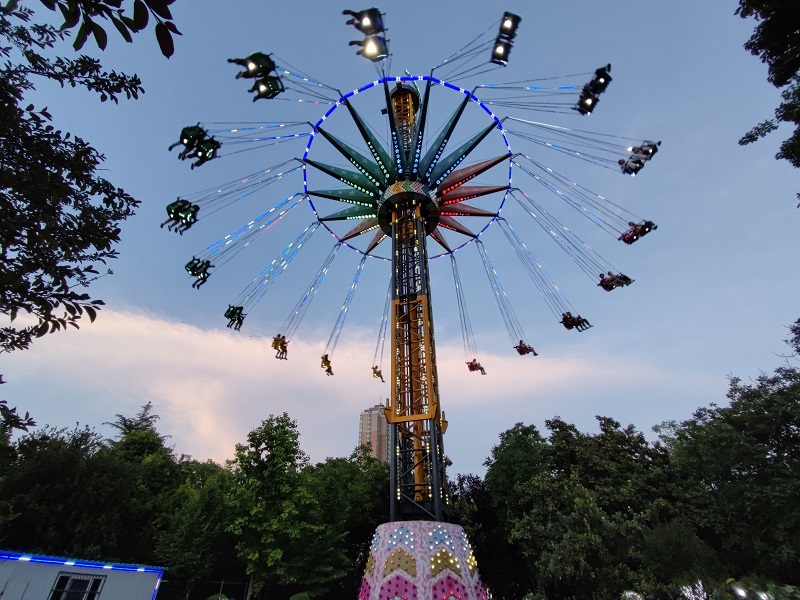
A swing tower attraction running 32 passengers per cycle at four-minute intervals accumulates a large number of restraint operations every season. That is why restraint components are treated as consumables rather than permanent parts.
5. Duty Cycle and Annual Hours
The single biggest variable in operating life is duty cycle. A ride open 120 days a year at modest occupancy runs a fraction of the cycles of a ride open 300 days at a resort with high footfall.
Parks should track operating hours and cycles from the first season. That data, not the calendar, is what the manufacturer needs when advising on component replacement or a mid-life overhaul.
6. Climate and Corrosion
Corrosion is the quiet destroyer of outdoor structures. Coastal sites with salt spray, humid tropical sites and industrial areas all accelerate the deterioration of coatings and fasteners.
The practical response is a more frequent coating inspection and a repair budget from the start. A tower that is touched up annually can last far longer than one where damage is discovered only when rust has reached the steel.
7. Maintenance Quality Extends Life
Two identical rides can differ by years in service life because of maintenance. Regular lubrication, correct torque, prompt replacement of worn parts and a clean, dry electrical cabinet all delay the point at which components need to be rebuilt.
The opposite is also true: skipped lubrication and deferred replacement turn a manageable component cost into a structural or safety issue. The maintenance budget is therefore part of the life-cycle budget, not a separate line.
8. Refurbishment vs Replacement
At some point the park faces a choice: refurbish the ride or replace it. Refurbishment typically covers the drive, the restraints, the control system, the coating and any structural repairs identified by inspection.
Replacement becomes the better option when the structure itself has deteriorated beyond economic repair, or when the ride no longer meets current safety expectations. A high swing ride by Dinis is designed so that major components can be replaced without dismantling the tower, which extends the period before that decision has to be made.
9. A Life-Cycle Plan
- Years 1–5: routine maintenance, warranty follow-up, coating inspection
- Years 5–10: first component replacements, control system review
- Years 10–15: mid-life overhaul, restraint and drive refurbishment
- Years 15+: structural review, replacement assessment, refurbishment decision
The exact years depend on duty cycle and climate, but the structure of the plan is the same for every commercial tower.
Build the plan before opening, not after the first major repair. A park that knows when the restraints, the drive and the coating are due for renewal can fund them from operating cash flow instead of interrupting the season.
The structure is fabricated from structural steel and protected for outdoor service. Dinis has supplied tower rides, ferris wheels, swing chairs and complete park equipment packages from Zhengzhou, China for more than twenty years. As an amusement ride factory, the company provides the maintenance schedule, spare parts list and technical documentation that a park needs to plan this life cycle from the first season.
Current project reference: https://www.dinisdreammyland.com/products/42-m-sky-flyer-ride-for-sale/