A Ferris wheel is not just another amusement ride.
It is a landmark structure, a long-term asset, and often the visual identity of an entire park or city project.
Because of its scale, lifespan, and public visibility, who you buy it from matters as much as what you buy.
Working with a professional Ferris wheel manufacturer is not a formality — it is a strategic decision that directly affects safety, operating cost, approval timelines, and long-term return on investment.
Below is why experienced park owners, investors, and city planners prioritize professional manufacturers over low-cost suppliers.
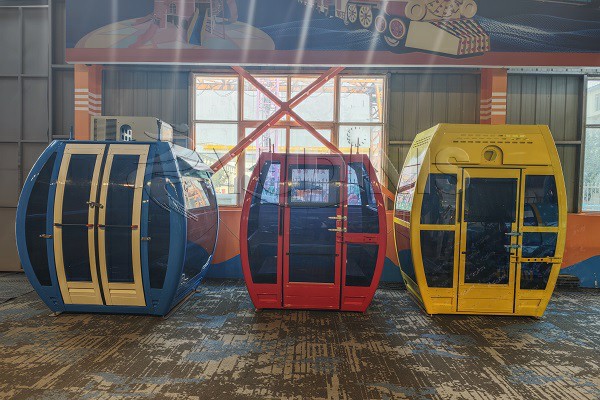
1. Ferris Wheels Are Engineering Projects, Not Standard Products
Unlike compact amusement rides, a observation wheel for sale is a large-scale mechanical structure involving:
Structural steel engineering
Dynamic load calculations
Wind resistance and fatigue analysis
Precision alignment of bearings and hubs
Long-term corrosion protection
A professional Ferris wheel manufacturer does not simply “build to size.”
They design the wheel based on:
Local wind and seismic conditions
Installation environment (urban plaza, seaside, desert, mountain area)
Daily operating frequency
Passenger load patterns
This engineering depth directly impacts safety and lifespan — often determining whether the wheel operates reliably for 20–30 years or becomes a maintenance burden after five.
2. Safety Certification Starts at the Manufacturer Level
Ferris wheels are subject to some of the strictest safety standards in the amusement industry.
A professional manufacturer can provide:
EN 13814, ASTM F24, or equivalent compliance
Structural calculation reports
Welding and material traceability
Load testing documentation
Redundant safety system design
For city parks and public projects, incomplete documentation can delay approvals for months or even years.
In contrast, manufacturers without certification experience often leave buyers struggling with local inspectors, insurance companies, and regulators.
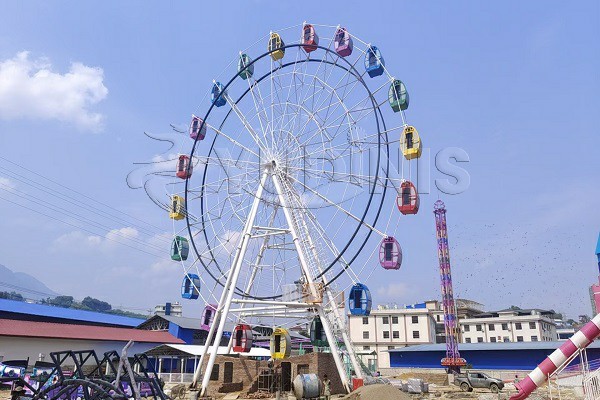
3. Design Quality Directly Affects Operating Stability
Operational smoothness is not cosmetic — it is mechanical quality.
Professional Ferris wheel manufacturers focus on:
Precise cabin balance
Low-vibration rotation systems
High-quality drive motors and gearboxes
Accurate speed control and braking systems
Poor design leads to:
Cabin sway
Uneven rotation
Increased component wear
Higher noise levels
For visitors, this reduces ride comfort.
For operators, it means higher maintenance costs and shorter component life.
4. Customization Is a Capability, Not a Promise
Many suppliers claim they “support customization.”
Few can execute it properly.
A professional manufacturer can customize:
Wheel diameter (30 m, 40 m, 50 m, 60 m+)
Cabin types (open, enclosed, VIP, gondola-style)
Passenger capacity per cabin
Lighting systems and programming
Color schemes and branding integration
More importantly, they ensure customization does not compromise structural integrity or certification.
This is critical for projects such as:
Tourism-oriented observation wheels
Waterfront and skyline developments
5. Installation and Commissioning Support Reduces Risk
Ferris wheel installation is a complex, multi-stage process:
Foundation preparation
Hub and axle alignment
Segment assembly
Cabin installation
Load testing and commissioning
Professional manufacturers provide:
On-site technical engineers
Installation manuals based on real projects
Commissioning checklists
Operator training
Without this support, even a well-built wheel can fail due to improper installation.
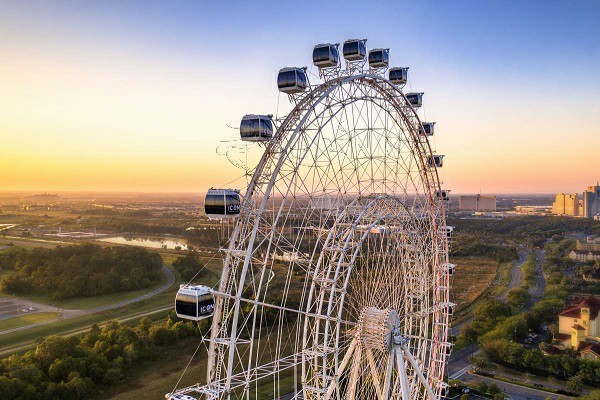
6. Long-Term Maintenance Depends on Manufacturer Support
A Ferris wheel for sale is expected to operate for decades.
This requires long-term technical continuity.
Professional manufacturers offer:
Standardized spare parts
Clear maintenance schedules
Remote technical support
Upgrade options for control systems and lighting
When spare parts are non-standard or undocumented, maintenance costs increase sharply — especially for international projects.
7. Total Cost of Ownership Is More Important Than Purchase Price
The lowest purchase price rarely equals the lowest total cost.
Working with a professional Ferris wheel manufacturer reduces:
Unexpected downtime
Emergency repair expenses
Insurance premiums
Compliance-related delays
Over a 10–20 year operating period, these savings far exceed any initial price difference.
8. Resale Value and Asset Credibility
Ferris wheels from reputable manufacturers retain value.
Why?
Recognized engineering standards
Documented maintenance history
Market trust in the brand
For investors, this matters.
A Ferris wheel is not only an attraction — it is a balance-sheet asset.
Final Thought
A Ferris wheel defines how visitors perceive your park, your project, or your city skyline.
Choosing a professional Ferris wheel manufacturer means choosing:
Engineering reliability
Regulatory confidence
Operational stability
Long-term financial return
In large-scale amusement projects, success is rarely determined by who offers the lowest quote — but by who understands the responsibility of building a structure that carries people safely, visibly, and continuously for decades.
When the Ferris wheel becomes the symbol of your project, professionalism is not optional — it is essential. Click our official website for more professional information: https://www.kidsparksolutions.com/ferris-wheel-for-sale/